Bartholomaeus Pitiscus, Date of Birth, Place of Birth, Date of Death
TweetBartholomaeus Pitiscus
German astronomer and mathematician

 Date of Birth: 03-Sep-1561
 Place of Birth: Zielona Góra, Lubusz Voivodeship, Poland
Date of Death: 02-Jul-1613
Profession: astronomer, mathematician, theologian
Zodiac Sign: Virgo 
About Bartholomaeus Pitiscus
- Bartholomaeus Pitiscus (also Barthélemy, Bartholomeo, August 24, 1561 – July 2, 1613) was a 16th-century German trigonometrist, astronomer and theologian who first coined the word trigonometry. Pitiscus was born to poor parents in Grünberg (Zielona Góra) in Lower Silesia, nowadays in Poland, but then part of the Austrian-ruled Duchy of Glogau (Glogów).
- He studied theology in Zerbst and Heidelberg.
- A Calvinist, he was appointed to teach the ten-year-old Frederick IV, Elector Palatine of the Rhine, by Frederick's Calvinist uncle Johann Casimir of Simmern, as Frederick's father had died in 1583.
- Pitiscus was subsequently appointed court chaplain at Breslau (Wroclaw) and court preacher to Frederick.
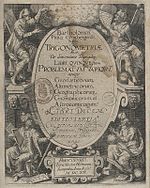
- Pitiscus supported Frederick's subsequent measures against the Roman Catholic Church. Pitiscus achieved fame with his influential work written in Latin, called Trigonometria: sive de solutione triangulorum tractatus brevis et perspicuus (1595, first edition printed in Heidelberg), which introduced the word trigonometry to the English and French languages, translations into which had appeared in 1614 and 1619, respectively.
- It consists of five books on plane and spherical trigonometry.
- Pitiscus is sometimes credited with inventing the decimal point, the symbol separating integers from decimal fractions, which appears in his trigonometrical tables and was subsequently accepted by John Napier in his logarithmic papers (1614 and 1619). Pitiscus edited Thesaurus mathematicus (1613) in which he improved the trigonometric tables of Georg Joachim Rheticus and also corrected Rheticus’s Magnus Canon doctrinæ triangulorum.Pitiscus died in Heidelberg.
- The lunar crater Pitiscus is named after him. The classical scholar Samuel Pitiscus (1637-1727) was his nephew.
Read more at Wikipedia
See Also
- Famous People's Birthdays on 03 September, Poland
- Famous People's Birthdays in September, Poland
- Famous astronomer's Birthdays on 03 September, Poland
- Famous astronomer's Birthdays in September, Poland
- Famous mathematician's Birthdays on 03 September, Poland
- Famous mathematician's Birthdays in September, Poland
- Famous theologian's Birthdays on 03 September, Poland
- Famous theologian's Birthdays in September, Poland