Paul Haenlein, Date of Birth, Place of Birth, Date of Death
TweetPaul Haenlein
German aerospace engineer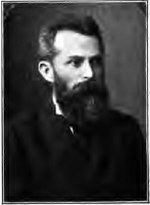

 Date of Birth:
  Place of Birth: Mainz, Rhineland-Palatinate, Germany
About Paul Haenlein
- Paul Haenlein (17 October 1835 in Cologne – 27 January 1905 in Mainz) was a German engineer and flight pioneer.
- He flew in a semi-rigid-frame dirigible.
- His family belonged to the Citoyens notables, those notabilities who led the economy, administration and culture of Mainz. Haenlein received an education as a mechanical engineer and pattern maker.
- He studied at the Technische Hochschule in Karlsruhe.
- Subsequently he worked as graduated civil engineer for different factories.
- He was the first to create a dirigible airship which was powered by an internal combustion engine.
- This Lenoir-type motor obtained its fuel from the gas in the balloon.
- It had four horizontal cylinders, which delivered about 6 horsepower (4.5 kW) with a consumption of approximately 250 cubic feet (7.1 m3) of gas per hour.
- With a mass of 233 kg and an engine displacement of 19.2 l it delivered a continuous power of 2.7 kW.
- The gas was sucked from the envelope of the balloon, which was kept fully inflated by pumping in compensating air to the air bags inside the main envelope.
- Due to the consumption of gas, the lifting force decreased, so the range of the airship had been limited.
- In 1872 Haenlein obtained a U.S.
- patent (No.
- 130 915) to use the otherwise wasted gas in the dirigible's engines.
- On 13 December, Paul Haenlein tested the first airship with a gas engine in Brünn, achieving 19 km/h.
- This airship was a direct forerunner of the Lebaudy type, 164 feet (50 m) in length, 30 feet (9.1 m) greatest diameter, and with a cubic capacity of 85,000 feet (26,000 m).
- The airship achieved 19 km/h.
- The tests were stopped later, because of a shortage of money.
- A propeller of 15 feet (4.6 m) in diameter was driven by the Lenoir engine with 40 revolutions per minute.
- This was the first instance of the use of an internal combustion engine in connection with aeronautical experiments.
- The envelope of the dirigible was rendered airtight by means of an internal rubber coating, with a thinner film on the outside.
- Syngas, used for inflation, formed a suitable fuel for the engine, but limited the height to which the dirigible could ascend.
- Such trials as were made were carried out with the dirigible held captive.
- A full experiment was prevented because funds ran low, but Haenlein's work constituted a distinct advance on all that had been done previously. This engine type had the disadvantage of requiring either a gas-producer or a large storage capacity for the gas, either of which makes the total weight of the power plant much greater than that of a petrol engine.
Read more at Wikipedia
See Also
- Famous People's Birthdays on 17 October, Germany
- Famous People's Birthdays in October, Germany
- Famous engineer's Birthdays on 17 October, Germany
- Famous engineer's Birthdays in October, Germany
- Famous balloonist's Birthdays on 17 October, Germany
- Famous balloonist's Birthdays in October, Germany
- Famous aerospace engineer's Birthdays on 17 October, Germany
- Famous aerospace engineer's Birthdays in October, Germany