Pujya Mota, Date of Birth, Date of Death
TweetPujya Mota
A Spiritual Scientist who established Hari Om ashram in Nadiad and Surat , Gujarat, India. Ashram is popularly Known as "Maun Mandirs". Anyone From Any religion or Country Can Book Maun Room For Spiritual Progress.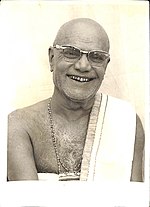

 Date of Birth:
About Pujya Mota
- Pujya Shree Mota (4 September 1898 – 23 July 1976), or Chunilal Asharam Bhavsar, was a spiritual leader who established ashrams in Nadiad and Surat in Gujarat, India.
- He founded the Hari Om Ashram, also known as the Maun Mandir, near Nadiad.Pujya Shree Mota says "I am Omni-Present".
- To attain self realization, he constantly made efforts to achieve his Godly state by obeying his Guru - Keshvanandji (Dhooniwada Dada).
- Highlights on Pujya Shree Motas Youth Life Even from his childhood different types of humane qualities surfaced in him.
- While talking about his family’s poverty in his early years he never expressed any helplessness or concern.
- Even at the tender age of seven when he had to work in the fields as a helping hand in transplanting and when he received lesser wages than his just due, he firmly and with dignity opposed and fought the injustice meted out to him by his paymasters.
- He has noted some-where that any sorrow that befell him was for his own good only for it helped him progress and climb higher the ladder of life.
- This insight had dawned in him in his eighth year.
- Even while doing hard manual labour he never shirked or evaded responsibilities and never showed unwillingness. During his student years when he had to work as a peon to help his family he never felt any loss of self-respect or dignity.
- In this manner had emerged to the front even in his childhood endurance, tolerance, the desire to be of help in fighting family’s poverty, courage, common sense, intuitiveness, the ability to read the need of the time, to resist any injustice. When Gandhiji sounded his clarion call to the youth of the country to join the freedom struggle he was the first to give up his college studies and plunge into the struggle.
- He has very humbly and casually stated about his sacrifice of seeking a lucrative job after completion of studies to the service of the country which at that point of time in Indian history constituted a heroic deed; he never boasted about it.
- He was the first to join Gujarati Vidya Peeth and the first to leave to serve the cause of Harijans, the untouchables of India; here too he plunged into it whole-heartedly.
- His great sacrifice as a youth from a very poor family ranked quite high in the country’s history of the time as rare and unique.
- This has never been reported anywhere yet Shri Mota has merely as a matter of fact, casually mentioned it as a small incident of not much importance but to be simply glossed over Journey from a Human to Divine (Pujya Shree Mota) After that when he was offered a teacher’s post in South Africa he declined it.
- Firmness in his determination is a cardinal virtue on the path to God.
- Pujya Shri Mota while guiding his friends along his spiritual path has emphasised this important quality.
- Poet and Devotee Dayaram has sung in one place, ‘My Beloved dwells in the palace of firm determination.’ When he was down with epilepsy and knew his body was hereafter unfit for any work his decision to end his life in the swirling waters of the river Narmada by jumping into it from a high rock gives us a glimpse of his innate power or shakthi, that is unflinching determination.
- Miraculously the Divine intervened to save his life, for a Divine purpose was cut out for him even from birth. Among his special virtues were, never be carried away by external appearances, never move forward without solving present urgent problems or issues.
- In one instance he even met Gandhiji and told him politely all he had to tell about the school matters. Even about chanting God’s Name or mantra he experimented before being convinced to continue.
- He even accepted his great masters like Keshavanandji, Balayogi, Shri Upasani Maharaj merely on the strength of his personal experiences.
- All these constitute his basic qualities. After commencing spiritual penance he tried to analyse and understand each step or stage scientifically and even noted the results with a critical mind.
- In India’s spiritual history this method of scientific inquiry is unique and unparalleled. Gandhiji understood him well and so said, ‘you will be a great researcher in spiritual science’. Even while discharging his worldly duties he kept secret and hidden from outward view his spiritual practices, even his colleagues knew nothing about this. Even in life’s sorrows, challenges and misfortunes he saw God’s Grace at work and he tried to live his life in the light of that Grace.
- He considered even a cobra’s bite as an act of God’s Grace, and in spite of his determination not to marry, he surrendered himself to his mother’s wishes and Guru’s command and got married. He went through a great life-and-death struggle and conflict thereafter to achieve nonstop chanting of his mantra, and reached a high stage in spiritual evolution The Formless God that was the aim and object of Pujya Shri Mota’s seeking was Life itself.
- The transformation of the baser instincts like liking and disliking, fear and anger, lust and greed, hope and ambition into divine qualities, life free of dualities was Shri Mota’s true God.
- In order to manifest this formless, impersonal God in his life, he had recourse to prayers, self consecration, dedication, chanting, singing God’s Name and Glories, meditation etc.
- all done from the depths of his heart.
- This is a noteworthy feature of his spiritual efforts.
- Impersonal devotion includes knowledge and wisdom.
- From the beginning of his life spiritual till giving up his mortal coils he remained a true devotee, Bhagat. In his spiritual quest if there is any vision of the Form that he had it was the Form his great Guru.
- As he advanced further on the path this Form of his great Master yielded place to the Formless.
- His intense love, awe and adoration of his Master gave rise to many thrilling, awe-inspiring experiences, bordering on the miraculous.
- Obeying thecommands of his Guru was his life’s main mission, his heart’s delight, overflowing joy, the throb of his heart.
- Through various metaphysical phenomena God, his Bhagwan descended into His Bhagat, Mota, as power or Shakthi.
- Pujya Shri Mota has depicted his spiritual evolution with clarity and in great detail.
- Realisation of Form, mind’s peace and silence, release from all thoughts, realisation of the Formless; all have been clearly, vividly delineated.
- From 1922 to 1939 he has climbed the highest pinnacle of spiritual realisation. Thereafter the mighty river of love and benediction began to flow from his heart enveloping all those willing to be transformed and turn to God. After self-realisation his life’s entire activity was merely a divine Leela or sport.
- His life’s great transformation and change he has portrayed in a very simple and easy to understand style.
- His entire life after liberation has been one of cause and effect that is prarabdha of his previous lives linked with the lives associated with him in previous birth. He has undertaken remarkable works, actions, gross and subtle, mysterious and divine in order to turn and lead willing souls towards the Divine, which is the true mission of a Liberated or a free soul
Read more at Wikipedia