Pío Valenzuela, Date of Birth, Place of Birth, Date of Death
TweetPío Valenzuela
Filipino politician
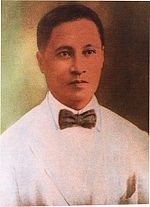

 Date of Birth: 11-Jul-1869
 Place of Birth: Bulacan, Luzon, Philippines
Date of Death: 06-Apr-1956
Profession: politician
Nationality: Philippines
Zodiac Sign: Cancer 
About Pío Valenzuela
- Pío Valenzuela y Alejandro (July 11, 1869 – April 6, 1956) the a Filipino physician and revolutionary leader.
- At the age of 23, he joined the society of Katipunan, a movement which sought the independence of the Philippines from Spanish colonial rule and started the Philippine Revolution.
- Together with Andrés Bonifacio and Emilio Jacinto, they formed the secret chamber of the society called Camara Reina.
- He took charge of the publication of Ang Kalayaan, Katipunan's first and only official publication.
- He was the one who tried to convince the exiled José Rizal to join the revolutionary movement.
- He was also, however, among those who testified before a court martial against Rizal during the investigation that would lead to the hero's ultimate death. When the Katipunan was discovered, he fled to Balintawak (now part of Quezon City) on August 20, 1896, but he later availed of an amnesty that the Spanish colonial government offered and he surrendered on September 1, 1896.
- He was deported to Spain where he was tried and imprisoned in Madrid.
- He was later transferred to Málaga, and then to a Spanish outpost in Africa.
- He was incarcerated for about two years. He returned to the Philippines in April 1899 and resumed his medical practice.
- He was immediately arrested by the Americans in fear of inciting insurrection.
- While still in prison, Valenzuela was elected the municipal president in his hometown Polo which forced the Americans to release him.
- From 1921-1925, he served as the governor of the province of Bulacan.Valenzuela was nevertheless under doubt whether he was a hero or a traitor.
- His patriotism was questioned due to his lenient and soft leaning towards the Spanish.
Read more at Wikipedia