Jean-Baptiste Pater, Date of Birth, Place of Birth, Date of Death
TweetJean-Baptiste Pater
French painter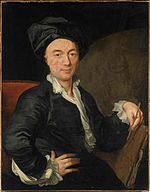

 Date of Birth:
  Place of Birth: Valenciennes, Hauts-de-France, France
About Jean-Baptiste Pater
- Jean-Baptiste Pater (December 29, 1695 – July 25, 1736) was a French rococo painter. Born in Valenciennes, Pater was the son of sculptor Antoine Pater and studied under him before becoming a student of painter Jean-Baptiste Guide.
- Pater then moved to Paris, briefly becoming a pupil of Antoine Watteau in 1713.
- Watteau, despite treating Pater badly, had a significant influence on him.
- However the two quarreled and Pater returned to Valenciennes, where he remained for two years.
- In 1721, Pater and the dying Watteau reconciled; subsequently Pater became a student of Watteau once again, although only for a month before the latter's death.
- Pater later claimed to have learnt everything he knew during those few weeks with Watteau.
- He was accepted into the Académie in 1728, presenting a large military work in the popular Watteau style: La Rejouissance des Soldats (Louvre). Pater adopted the popular Fête galante subject matter, heavily imitating his teacher Watteau—indeed he directly copied some of his figures.
- Pater used a traditional Rococo pastel palette.
- His most characteristic difference in style from other artists of the time surrounded his use of shimmering lines.
- His most prominent customer was Frederick the Great, who sat for two portraits in the "Turquerie" style: LeSultan au Harem and Le Sultan au Jardin.
- One of Pater's most renowned works is Landscape with a Cart (Schloss Charlottenburg), which is considered to display a feathery application of paint that anticipates Francesco Guardi.
- The delicately constructed subject matter and figures subordination to the buildings represent a movement away from fête galante, a development that was cut short by Pater's death in 1736.
Read more at Wikipedia
Image Author, Source and License
Author:
Source: culture.gouv.fr
License: CC-PD-Mark
PD-Art (PD-old-100-expired)
PD-old-100-expired
More Details
Jean-Baptiste Pater
(1695–1736)   |
|||
|---|---|---|---|
.jpg) |
|||
| Description | French painter | ||
| Date of birth/death | 29 December 1695 | 25 July 1736 | |
| Location of birth/death | Valenciennes | Paris | |
| Work location | Paris, Valenciennes | ||
| Authority control | |||
Source: culture.gouv.fr
License: CC-PD-Mark
PD-Art (PD-old-100-expired)
PD-old-100-expired
More Details