
 Date of Birth:
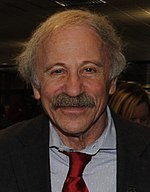
About Richard Vatz
- Richard Eugene Vatz (born December 21, 1946) is a professor of Rhetoric and Communication at Towson University. Vatz is a Faculty Fellow at the Eastern Communication Association and has been honored by the National Communication Association through his 2012 acceptance in the “Teachers on Teaching” Seminar as well as a separate seminar on his new books (see below).
- Vatz has been member of the Board of Trustees for several years and an associate psychology editor for the journal USA Today Magazine since 1987 and has been a member of the National Communication Association since 1969. Vatz wrote The Only Authentic Book of Persuasion: the Agenda-Spin Model, (McGraw-Hill, 2017), and he is co-editor of Thomas Szasz: The Man and His Ideas (Transaction Books, 2017). Vatz has spoken at Hillsdale College and the University of Richmond and a lengthy list of other schools and businesses.
- He has taught a course called “Persuasion” throughout his entire career to filled classes. He is married to Joanne Pychock Vatz with 2 grown children, and one grandchild. Vatz has published a book and hundreds of essays, articles and reviews and given scores of lectures on topics including the preeminence of rhetorical study, political rhetoric, rhetoric and psychiatry and media criticism.
- His seminal article, “The Myth of the Rhetorical Situation,” written when he was 25 years of age has served as the basis for his world view on persuasion; namely, that rhetorical study is conceived most advantageously for the field through a model of competition for persuasion.
- This competition is evidenced by persuaders’ struggles to create salience for issues or evidence (now commonly termed an “agenda”) followed by the struggle to infuse the saliency with the desired meaning (or now, spin and framing).
- This perspective emphasizes rhetoric as a creative act with increased persuader responsibility for the situation his or her rhetoric creates and/or sustains for chosen audiences.
- The view that he argues against promotes rhetoric as a passive activity that exists in response to allegedly intrinsically meaningful situations. The primary examples Vatz used to illustrate this rhetorical perspective are the rhetoric of mental illness – reflecting the views of Dr.
- Thomas S.
- Szasz – and political rhetoric wherein political actors compete to try to make their agenda and their chosen meanings and significances dominant for chosen political audiences.
Read more at Wikipedia