John Russell Reynolds, Date of Birth, Place of Birth, Date of Death
TweetJohn Russell Reynolds
British neurologist and physician
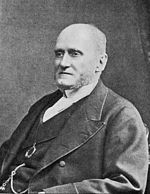

 Date of Birth: 22-May-1828
 Place of Birth: Romsey, England, United Kingdom
Date of Death: 29-May-1896
Profession: neurologist
Zodiac Sign: Gemini 
About John Russell Reynolds
- Sir John Russell Reynolds, 1st Baronet (22 May 1828 – 29 May 1896) was a British neurologist and physician. Reynolds was born in Romsey, Hampshire, as son of John Reynolds, an independent minister, and grandson of Dr.
- Henry Revell Reynolds.
- He received general education from his father, and was educated in his profession at University College, London, where he obtained three gold medals in the medical school.
- In 1851 he graduated M.B.
- in the university of London, and obtained a scholarship and gold medal in medicine.
- In 1852 he took the degree of M.D., and began practice in Leeds.
- He soon after moved to London, and took a house, 38 Grosvenor Street, in which Dr.
- Marshall Hall had lived.
- Hall announced to his patients in a printed circular that Reynolds had succeeded him in practice.
- Such procedure was contrary to a recognised understanding among physicians, and Hall incurred the censure of the College of Physicians.
- Reynolds, who was ignorant of Hall's intention, was in no way responsible for the circular, and was in no way involved in the censure.
- He was duly elected a fellow of the college in 1859.
- In the same year he was appointed assistant physician to University College Hospital, to which he continued attached throughout life.
- He had before been, in 1855, assistant physician to the Hospital for Sick Children, and in 1857 assistant physician to the Westminster Hospital.
- In 1865 he became professor of the principles and practice of medicine at University College, and in 1878 he was appointed physician-in-ordinary to the queen's household.
- He gained a considerable practice as a physician, and was often consulted in difficult cases of nervous disease.
- In 1869 he was elected a fellow of the Royal Society, and in 1883 vice-president of the Royal Medical and Chirurgical Society.
- He delivered the Lumleian lecture at the College of Physicians in 1867, the Harveian oration in 1884, and was elected president in 1893, on the death of Sir Andrew Clark.
- He was re-elected in 1894 and 1895, and on 1 January in the latter year was created a baronet.
- In the winter of 1895–6 he became too ill to offer himself for re-election as president of the College of Physicians.
- He died at his house in Grosvenor Street, London, after several weeks of illness of a pulmonary congestion, on 29 May 1896.
- He was married, first,at St Pancras Old Church, London, on 28 August 1852 to Margaretta Susannah Ainslie (1831-1880) and, secondly, to Frances (Plunkett) Reynolds widow of C.
- J.
- C.
- Crespign, but left no children. The Reynolds Baronetcy, of Grosvenor Street, was created in the Baronetage of the United Kingdom on 28 February 1895 for John Russell Reynolds.
- The title became extinct on his death. Reynolds devoted himself from an early period to the study of nervous diseases, and in 1854 published an Essay on Vertigo; in 1855 Diagnosis of Diseases of the Brain, Spinal Cord, and Nerves, as well as Tables for the Diagnosis of Diseases of the Brain; in 1861 a treatise on epilepsy; in 1871 Lectures on the Clinical Uses of Electricity; in 1872 The Scientific Value of the Legal Tests of Insanity; besides many papers in medical periodicals and the transactions of medical societies, and several addresses to medical associations.
- His writings on nervous diseases were useful contributions to a department of medicine in which much work remained undone, but in the flood of modern observations they have been submerged.
- He will chiefly be remembered among physicians as the editor of the System of Medicine, in five volumes, published from 1866 to 1879, a collection of essays on diseases, written by the most competent men who could be induced to write—compositions of varying merit, but generally of high value.
- He himself wrote the parts on erysipelas, on inflammation of the lymphatics, and on several forms of nervous disease.
- He published in 1893 a Life of Dr.
- Walter Hayle Walshe.
- Reynolds was a tall man, with dark hair, with a dignified delivery and some oratorical power. Reynolds died in London.
Read more at Wikipedia