Sir Thomas Dyke Acland, 11th Baronet, Date of Birth, Place of Birth, Date of Death
TweetSir Thomas Dyke Acland, 11th Baronet
British politician and educational reformer
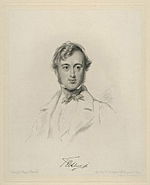

 Date of Birth: 25-May-1809
 Place of Birth: Broadclyst, England, United Kingdom
Date of Death: 29-May-1898
Profession: politician
Zodiac Sign: Gemini 
About Sir Thomas Dyke Acland, 11th Baronet
- Sir Thomas Dyke Acland, 11th Baronet, FRS (25 May 1809 – 29 May 1898) was a British educational reformer and a politician who sat in the House of Commons between 1837 and 1886 initially as a Tory and later, after an eighteen-year gap, as a Liberal.Acland was the eldest son of Sir Thomas Dyke Acland, 10th Baronet, and his wife Lydia Elizabeth Hoare, daughter of Henry Hoare, a partner in the banking firm of C.
- Hoare & Co.
- Sir Henry Wentworth Acland was his younger brother.
- He was educated at Harrow and Christ Church, Oxford, where he was friends with William Ewart Gladstone and Lord Elgin among others.
- He was a major in the Royal 1st Devonshire Yeomanry Cavalry.
- In 1839 he was made a Fellow of the Royal Society.In 1837, Acland entered Parliament for Somerset West as a Tory.
- During the tensions within the Tory party in the 1840s over the Corn Laws, Acland supported Sir Robert Peel's free trade policy.
- He did not stand for Parliament in the 1847 general election and was to remain out of the House of Commons for nearly twenty years. Acland showed a strong interest in and commitment to educational reform.
- He initially promoted the maintenance and defence of church schools and the establishment of diocesan theological colleges.
- However, he later became a supporter of educational projects of a more Liberal character and played a leading role in the establishment of the Oxford local examinations system in 1858.
- He was also involved in agricultural issues and was a Trustee of the Royal Agricultural Society.
- Acland was influential in the recruitment of Augustus Voelcker as consultant agricultural chemist to the Royal Bath and West of England Society around 1849.
- Acland was also Honorary Colonel 3rd Volunteer Bn Devonshire Regiment and a J.P.
- for Devon and Somerset.
- He contested Birmingham as a moderate Liberal in 1859, but was defeated by John Bright.In 1865, Acland returned to the House of Commons as a Liberal when he was elected as one of two representatives for Devonshire North.
- Between 1869 and 1874, he served as a Church Estates Commissioner.
- He never held ministerial office but was sworn of the Privy Council in 1883.
- The Devonshire North constituency was abolished by the Redistribution of Seats Act of 1885 and Acland was instead returned to Parliament for Wellington.
- He voted for the First Home Rule Bill in June 1885 and this led to him being defeated at the 1886 general election.Apart from his public career Acland was also a patron of art.
- He was a friend of John Ruskin and an early admirer of John Everett Millais. Acland married firstly Mary Mordaunt, daughter of Sir Charles Mordaunt, 8th Baronet, in 1841.
- They had three sons and two daughters.
- After her death in 1851 he married secondly Mary Erskine, only surviving child of John Erskine, in 1856.
- This marriage was childless.
- Lady Acland died in May 1892.
- Acland survived her by six years and died in May 1898, aged 89.
- He was succeeded in the baronetcy by his eldest son Thomas, who was also a politician.
- Acland's second son Arthur, who succeeded to the baronetcy in 1919, also had a successful political career.
Read more at Wikipedia