Andrei Tarkovsky, Date of Birth, Place of Birth, Date of Death
TweetAndrei Tarkovsky
Soviet and Russian film-maker, writer, film editor, film theorist, theatre and opera director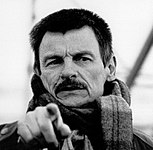

 Date of Birth:
  Place of Birth: Zavrazhye, Russia
About Andrei Tarkovsky
- Andrei Arsenyevich Tarkovsky (Russian: ?????´? ????´?????? ?????´?????, IPA: [?n'dr?ej ?r's?en?j?v??t? t?r'kofsk??j]; 4 April 1932 – 29 December 1986) was a Russian filmmaker, writer, and film theorist.
- He is widely considered one of the greatest directors in the history of cinema, and one of Russia's most influential filmmakers.
- His films explored spiritual and metaphysical themes, and are noted for their use of slow long takes and dreamlike visual imagery, as well as their preoccupation with nature and memory.Tarkovsky studied film at Moscow's State Institute of Cinematography under filmmaker Mikhail Romm, and subsequently directed his first five feature films in the Soviet Union: Ivan's Childhood (1962), Andrei Rublev (1966), Solaris (1972), Mirror (1975), and Stalker (1979).
- After years of creative conflict with Soviet authorities over his work, Tarkovsky left the country in 1979 and made his final two films abroad; Nostalghia (1983) and The Sacrifice (1986) were produced in Italy and Sweden respectively.
- In 1986, he also published a book about cinema and art entitled Sculpting in Time.
- He died of cancer later that year. Tarkovsky was the recipient of several awards at the Cannes Film Festival throughout his career (including the FIPRESCI prize, the Prize of the Ecumenical Jury, and the Grand Prix Spécial du Jury) and winner of the Golden Lion award at the Venice Film Festival for his debut film Ivan's Childhood.
- In 1990, he was posthumously awarded the Soviet Union's prestigious Lenin Prize.
- Three of his films—Andrei Rublev, Mirror, and Stalker—featured in Sight & Sound’s 2012 poll of the 50 greatest films of all time.
Read more at Wikipedia
See Also
- Famous People's Birthdays on 04 April, Russia
- Famous People's Birthdays in April, Russia
- Famous screenwriter's Birthdays on 04 April, Russia
- Famous screenwriter's Birthdays in April, Russia
- Famous actor's Birthdays on 04 April, Russia
- Famous actor's Birthdays in April, Russia
- Famous biographer's Birthdays on 04 April, Russia
- Famous biographer's Birthdays in April, Russia
- Famous film director's Birthdays on 04 April, Russia
- Famous film director's Birthdays in April, Russia
- Famous theater director's Birthdays on 04 April, Russia
- Famous theater director's Birthdays in April, Russia
- Famous film editor's Birthdays on 04 April, Russia
- Famous film editor's Birthdays in April, Russia
- Famous film actor's Birthdays on 04 April, Russia
- Famous film actor's Birthdays in April, Russia