Johann Gottlob von Quandt, Date of Birth, Place of Birth, Date of Death
TweetJohann Gottlob von Quandt
German artist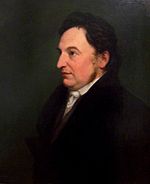

 Date of Birth:
  Place of Birth: Leipzig, Leipzig District, Germany
About Johann Gottlob von Quandt
- Johann Gottlob von Quandt (9 April 1787 – 19 June 1859) was a German artist, art scholar, and collector. Von Quandt was born in Leipzig.
- He had met and corresponded with Goethe. Some of his own works are exhibited in the Tower of Fresken at the town of Dürrröhrsdorf-Dittersbach, near Dresden.
- He died in Dresden. Gottlob von Quandt never received any formal education.
- He did, however, study under people like Johann Friedrich Rochlitz, C.
- de Renty, and Julius Schnorr von Carolsfeld.
- Gottlob von Quandt once rescued eleven pictures of Leipzig's Nicolai Church, some of which were the creations of Lucas Cranach the Elder.
- This notable act earned him the respect of Goethe.
- The rescue work also served as the stepping stone for him into a career of art historian and collector of old German paintings.
- He earned a high standing in the art world of his time, and his home in Rome was a meeting place for artists such as Johann Friedrich Overbeck, Julius Schnorr von Carolsfeld, Louise Seidler, and Bertel Thorvaldsen.
- Later, he left Rome for Dresden, where he spent the last part of his life.
- There, he turned his house into a kind of museum and a learning center for artists where they could work and study.The house also became a center from which von Quandt started his campaign for the promotion of the art of the Nazarenes.
- He contributed immensely toward this end, taking the Nazarenes art to the general public, increasing recognition of the work.
- As an art collector, von Quandt differed from other collectors in that he always allowed artists to choose their own subjects.
- He was a savior for the poor, as besides promoting art, he helped many youth from rural backgrounds to pursue studies.
Read more at Wikipedia
See Also
- Famous People's Birthdays on 09 April, Germany
- Famous People's Birthdays in April, Germany
- Famous writer's Birthdays on 09 April, Germany
- Famous writer's Birthdays in April, Germany
- Famous author's Birthdays on 09 April, Germany
- Famous author's Birthdays in April, Germany
- Famous artist's Birthdays on 09 April, Germany
- Famous artist's Birthdays in April, Germany
- Famous art historian's Birthdays on 09 April, Germany
- Famous art historian's Birthdays in April, Germany
- Famous philosopher's Birthdays on 09 April, Germany
- Famous philosopher's Birthdays in April, Germany
Image Author, Source and License
Author:
Source: Own work by uploader Paulae
License: PD
More Details
Carl Christian Vogel von Vogelstein
(1788–1868)    |
|||
|---|---|---|---|
 |
|||
| Alternative names | Vogel von Vogelstein; Carl Christian Vogel; Karl Christian Vogel von Vogelstein; Carl Vogel von Vogelstein | ||
| Description | German painter | ||
| Date of birth/death | 26 June 1788 | 4 March 1868 | |
| Location of birth/death | Wildenfels, Sachsen | Munich | |
| Work location | Dresden, St. Petersburg, Rom, München | ||
| Authority control | |||
Source: Own work by uploader Paulae
License: PD
More Details