Tytus Woyciechowski, Date of Birth, Place of Birth, Date of Death
TweetTytus Woyciechowski
Polish politician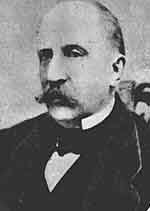

 Date of Birth:
  Place of Birth: Lviv, Lviv Oblast, Ukraine
About Tytus Woyciechowski
- Tytus Sylwester Woyciechowski (31 December 1808 in Lemberg, Galicia [now Lviv, Ukraine] – 23 March 1879 in Poturzyn, now Poland) was a Polish political activist, agriculturalist and patron of art.
- He was an early friend of Polish-French composer Frédéric Chopin. In his youth Woyciechowski was a fellow student of Chopin at the Warsaw Lyceum, and boarded with the Chopin family.
- He went on to study law at Warsaw University.
- Chopin dedicated to him his Op.
- 2 Variations on "Là ci darem la mano".
- In 1830 Chopin visited Woyciechowski at his estate in Poturzyn, which he had inherited from his mother.
- Woyciechowski acted as a confidant during Chopin's passion for the singer Konstancja Gladkowska.
- Chopin's passionate correspondence with Tytus at this period has given rise to conjecture that their friendship may have been homoerotic, at least on the part of the composer.Woyciechowski accompanied Chopin in his 1830 journey to Austria but, on learning of the November 1830 Uprising, returned to Warsaw to take part in the fighting.
- He became a second lieutenant and was awarded the Gold Cross for Valour.
- Whilst the two never met thereafter, they continued to correspond.
- Woychiechowski married Copuntess Aloysia Poletylo by whom he had four children - their second son being named Fryderyk after Chopin.Woyciechowski dedicated himself to agriculture, pioneered the introduction of crop rotation in Poland, and in 1847 founded one of the first sugar factories in the country.
- In 1861-62 he was an active member of the White Party, which took part in the failed January 1863 Uprising.The Woyciechowski collection of Chopin memorabilia was destroyed by fire in 1914, and the family manor house at Poturzyn was destroyed during the Second World War.His surname is an archaic spelling of the more common Wojciechowski (with a "j" instead of a "y").
Read more at Wikipedia
See Also
- Famous People's Birthdays on 31 December, Ukraine
- Famous People's Birthdays in December, Ukraine
- Famous People's Birthdays on 31 December, Poland
- Famous People's Birthdays in December, Poland
- Famous composer's Birthdays on 31 December, Ukraine
- Famous composer's Birthdays in December, Ukraine
- Famous composer's Birthdays on 31 December, Poland
- Famous composer's Birthdays in December, Poland