John Marshall Harlan (1899–1971), Date of Birth, Place of Birth, Date of Death
TweetJohn Marshall Harlan (1899–1971)
Former Associate Justice of the United States Supreme Court
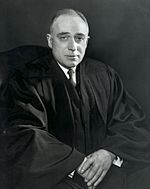

 Date of Birth: 20-May-1899
 Place of Birth: Chicago, Illinois, United States
Date of Death: 29-Dec-1971
Profession: judge, lawyer
Nationality: United States
Zodiac Sign: Taurus 
About John Marshall Harlan (1899–1971)
- John Marshall Harlan (May 20, 1899 – December 29, 1971) was an American lawyer and jurist who served as an Associate Justice of the U.S.
- Supreme Court from 1955 to 1971.
- Harlan is often called John Marshall Harlan II to distinguish him from his grandfather John Marshall Harlan, who served on the Supreme Court from 1877 to 1911. Harlan was a student at Upper Canada College and Appleby College and then at Princeton University.
- Awarded a Rhodes Scholarship, he studied law at Balliol College, Oxford.
- Upon his return to the U.S.
- in 1923 Harlan worked in the law firm of Root, Clark, Buckner & Howland while studying at New York Law School.
- Later he served as Assistant U.S.
- Attorney for the Southern District of New York and as Special Assistant Attorney General of New York.
- In 1954 Harlan was appointed to the United States Court of Appeals for the Second Circuit, and a year later president Dwight Eisenhower nominated Harlan to the United States Supreme Court following the death of Justice Robert H.
- Jackson.Harlan is often characterized as a member of the conservative wing of the Warren Court.
- He advocated a limited role for the judiciary, remarking that the Supreme Court should not be considered "a general haven for reform movements".
- In general, Harlan adhered more closely to precedent, and was more reluctant to overturn legislation, than many of his colleagues on the Court.
- He strongly disagreed with the doctrine of incorporation, which held that the provisions of the federal Bill of Rights applied to the state governments, not merely the Federal.
- At the same time, he advocated a broad interpretation of the Fourteenth Amendment's Due Process Clause, arguing that it protected a wide range of rights not expressly mentioned in the United States Constitution.
- Harlan is sometimes called the "great dissenter" of the Warren Court, and has been described as one of the most influential Supreme Court justices in the twentieth century.
- Justice Harlan was gravely ill when he retired from the Supreme Court on September 23, 1971.
- He died from spinal cancer three months later, on December 29, 1971.
- After Harlan's retirement, President Nixon appointed William Rehnquist to replace him.
Read more at Wikipedia