Edward Hyde, 3rd Earl of Clarendon, Date of Birth, Place of Birth, Date of Death
TweetEdward Hyde, 3rd Earl of Clarendon
English military officer, governor of New York and New Jersey
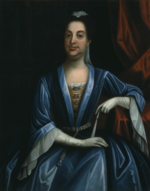

 Date of Birth: 28-Nov-1661
 Place of Birth: England, United Kingdom
Date of Death: 31-Mar-1723
Profession: politician, diplomat
Zodiac Sign: Sagittarius 
About Edward Hyde, 3rd Earl of Clarendon
- Edward Hyde, 3rd Earl of Clarendon (28 November 1661 – 31 March 1723), styled Viscount Cornbury between 1674 and 1709, was an English aristocrat and politician.
- Better known as Lord Cornbury, he was propelled into the forefront of English politics when he and part of his army defected from the Catholic King James II to support the newly arrived Protestant contender, William III of Orange.
- These actions were part of the beginning of the Glorious Revolution of 1688.
- As a reward, he was appointed governor of the provinces of New York and New Jersey, serving between 1701 and 1708. As a High Tory governor, his primary mission was to protect the colonies during the War of the Spanish Succession (known in the Americas as Queen Anne's War, or the 2nd French and Indian War; 1701 – 1714).
- His administration successfully prevented French incursions into the middle colonies.
- However, he became mired in the region's many factional conflicts and accrued powerful political enemies such as Lewis Morris, who would go on to become Governor of New Jersey in 1738. By 1708, war weariness led to a shift in the political tide in Great Britain.
- Governor Cornbury was recalled from the colonies, but was soon after installed as a member of Queen Anne's privy council.
- Lord Cornbury's fortunes changed again when George I was crowned King of Great Britain on 1 August 1714.
- Out of favor, Lord Cornbury died in Chelsea, London on 31 March 1723. Lord Cornbury's conduct as governor has been generally remembered as scandalous.
- He was accused by his political enemies of being a cross-dresser, a moral profligate, and wildly corrupt.
- Few contemporary accounts exist of his conduct; and modern writers disagree as to whether or not Cornbury was actually a cross-dresser, or if he was possibly transgender.
Read more at Wikipedia
See Also
- Famous People's Birthdays on 28 November, United Kingdom
- Famous People's Birthdays in November, United Kingdom
- Famous politician's Birthdays on 28 November, United Kingdom
- Famous politician's Birthdays in November, United Kingdom
- Famous diplomat's Birthdays on 28 November, United Kingdom
- Famous diplomat's Birthdays in November, United Kingdom
Image Author, Source and License
Author:
Source: https://www.nyhistory.org/exhibit/portrait-unidentified-woman-2
License: CC-PD-Mark
PD-Art (PD-old-100)
More Details
Unidentified painter
 |
|||
|---|---|---|---|
| Description | 18th-century portrait painting of women, with Unspecified, Not mentioned, Unidentified, Unknown or Anonymous, artist, and missing year. | ||
Source: https://www.nyhistory.org/exhibit/portrait-unidentified-woman-2
License: CC-PD-Mark
PD-Art (PD-old-100)
More Details